On behalf of the Student Health Center, welcome to Cal Poly Maritime Academy!
Questions? Call our general information line at 707-654-1170.
Physical and psychological well-being has a tremendous impact on a student's academic performance. Our mission is to provide high-quality health care and maintain the optimal health of our students by modifying or removing health-related barriers to learning. We meet this goal by helping our students obtain the skills to remain healthy throughout life and enhancing their experience as a member of the academy and wider community. The Student Health Center provides confidential and easily accessible clinic-based primary care services to all Cal Poly Maritime Academy matriculated students.
The academy encourages students to utilize the Student Health Center for their medical needs such as urgent care (drop-in), scheduled appointments, physicals, basic lab, medications prescribed by our healthcare providers and referrals to off-campus providers.
During the annual training cruise, the Cal Poly Maritime Academy Student Health Center relocates to the Medical Treatment Facility onboard Training Ship Golden Bear. This facility is staffed with a Chief Medical Officer (Physician) and a Medical Officer (Nurse Practitioner or Physician Assistant) 24 hours a day for emergency care. In addition to this 24-hour, on-call service, the medical team provides a drop-in clinic twice a day while at sea and once a day while in port for students to access health care. The training ship is equipped with a basic lab, x-ray, medical commodities and pharmaceuticals to support most of the health care needs presented by students.
While on campus or at sea, the care of certain illnesses, injuries and conditions may require hospitalization or services beyond our scope of authorized care. In this incidence, a student will be referred to local medical services where utilization of their medical insurance will be essential.

Click the links below for information on Student Health Center Services:
- Health Services
- Counseling & Psychological Services (CAPS)
- Confidential Advocacy
- Health Insurance Requirements
- Meet the Student Health Center Staff
- Notice of Privacy Practices
- Patient Rights and Responsibilities
- Children and Youth Behavioral Health Initiative
Hours of Operation and Contact Info
| General Information | 707-654-1170 |
| Fax | 707-654-1171 |
| Psychological Services | 707-654-1170 |
| Health Promotion and Wellness | 707-654-1170 |
| Emergencies | 911 |
| Suicide & Crisis Lifeline | 988 |
| MONDAY | 8:30 a.m. - 5:00 p.m. Closed 1:00 p.m. - 2:00 p.m. |
| TUESDAY | 8:30 a.m. - 5:00 p.m. Closed 1:00 p.m. - 2:00 p.m. |
| WEDNESDAY | 8:30 a.m. - 5:00 p.m. Closed 1:00 p.m. - 2:00 p.m. |
| THURSDAY | 8:30 a.m. - 4:00 p.m. Closed 1:00 p.m. - 2:00 p.m. |
| FRIDAY | 8:30 a.m. - 5:00 p.m. Closed 1:00 p.m. - 2:00 p.m. |
| SATURDAY | Closed |
| SUNDAY | Closed |
Emergency/After Hours Info
In case of a medical emergency, The Student Health Center and/or Cal Poly Maritime Academy’s Police will help in managing the emergency quickly and effectively.
Call Cal Poly Maritime Academy’s Police at 911 if you have a life-threatening emergency. True medical emergencies are transported by ambulance to local hospitals.
Emergency Resources
| Cal Poly Maritime Police | 911 |
| Suicide and Crisis Lifeline | 988 |
| Counseling & Pyschological Services (CAPS) | 707-654-1170 |
| CAPS Crisis / Drop-in Hours |
Monday - Friday: 2-3 p.m. in the Student Health Center |
| After Hours Medical & Mental Health Assistance Line |
Call (707) 654-1170 — Option 1 |
Protective Services
|
Child Protective Services – Solano County
|
(707) 784-8791 Emergency: 1-800-544-8696 |
|
Adult Protective Services – Solano County
|
(707) 784-8259 |
|
After Hours Medical and Psychological Assistance |
(707) 654-1170 |
Primary Mental Health Crisis Services
|
Solano County Crisis Stabilization Unit
|
(707) 428-1131 |
|
Cal Poly Maritime Police
|
911 |
|
Sutter Solano Medical Center, Vallejo – ER
|
300 Hospital Drive, Vallejo (707) 554-4444 |
|
Suicide and Crisis Lifeline
|
988 |
|
Rape & Intimate Partner Violence
|
(707) 557-6600 |
|
Vallejo Police Department Emergencies
|
(707) 552-3285 Call 911 |
|
Línea de Crisis – Spanish Language crisis support hotline
|
800-303-7432 |
Location
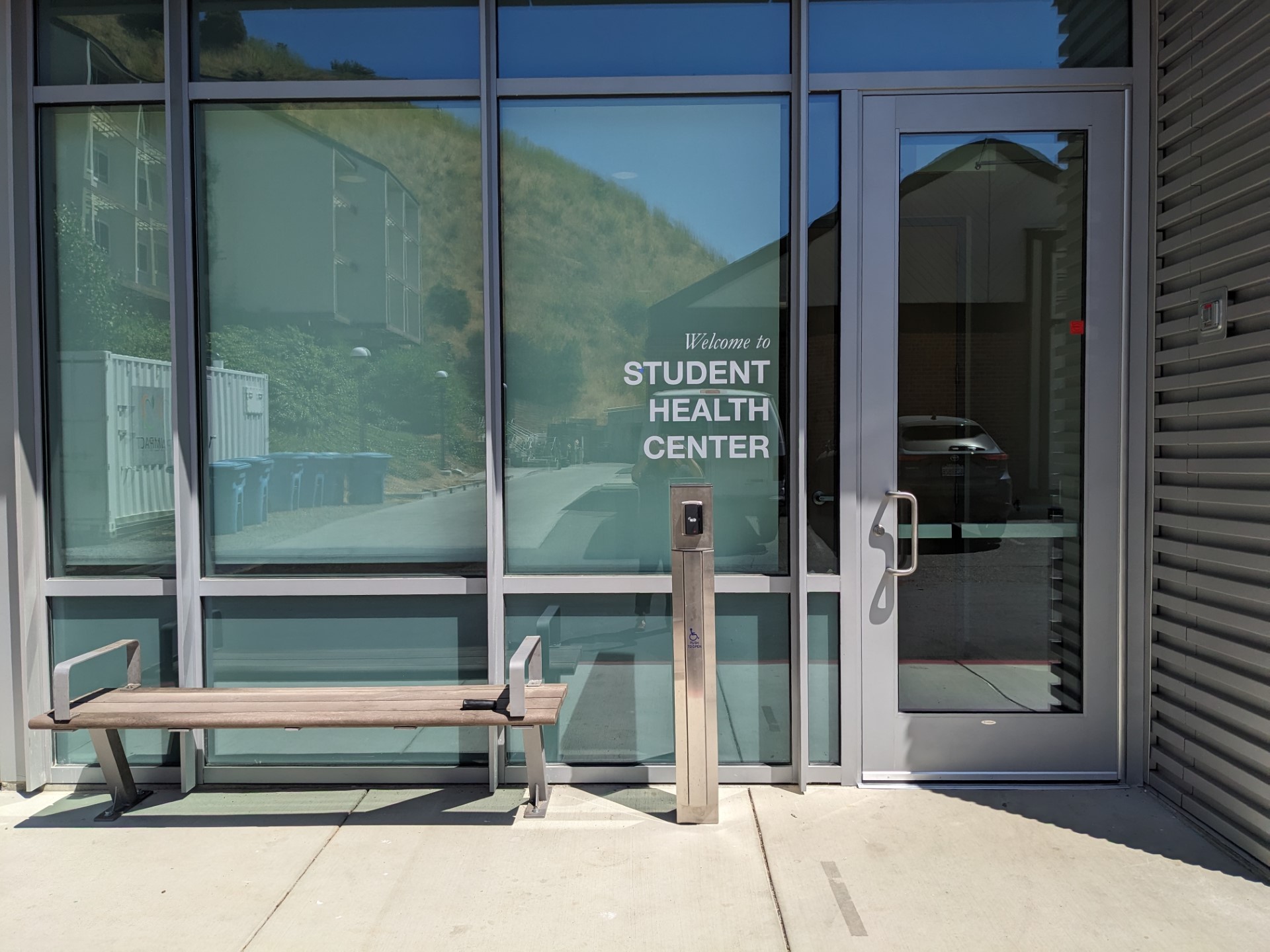
The Student Health Center is located behind the bookstore, on the back side of Mayo Hall.
Health Forms
Health forms will be accepted by the following modes of transmission:
- Hard copies via USPS or other service
- Photographed forms will NOT be accepted.
- Coast Guard Licensing Programs*
- Marine Engineering Technology
- Marine Transportation
- Mechanical Engineering - License Option
*For more information regarding USCG Medical, Psychological & Physical Guidelines, please view the NMC Merchant Mariner Medical Manual 08/2019.
- Non-Licensing Programs
- Business Administration - International Business & Logistics
- International Strategy and Security - Global Studies & Maritime Affairs
- Mechanical Engineering Non-License Option
- Oceanography
- Readmission Form
- U.S. Coast Guard Physical Forms
- Consent for Medical Release Form
Vaccination Requirements
Required Immunizations:
- Hepatitis B Vaccine
- Meningococcal Disease and Immunization
- MMR/MMRV Vaccine (Measles, Mumps, Rubella & Varicella)
- TD/Tdap Vaccine (Tetanus, Diphtheria, Pertussis) series & current booster within the last 10 years
- Tuberculosis Screening within the last year
- Varicella (Chickenpox) Vaccine
*These immunizations are not required for students in single semester/short-term international exchange programs.
Recommended Immunizations:
Vending Machine Information
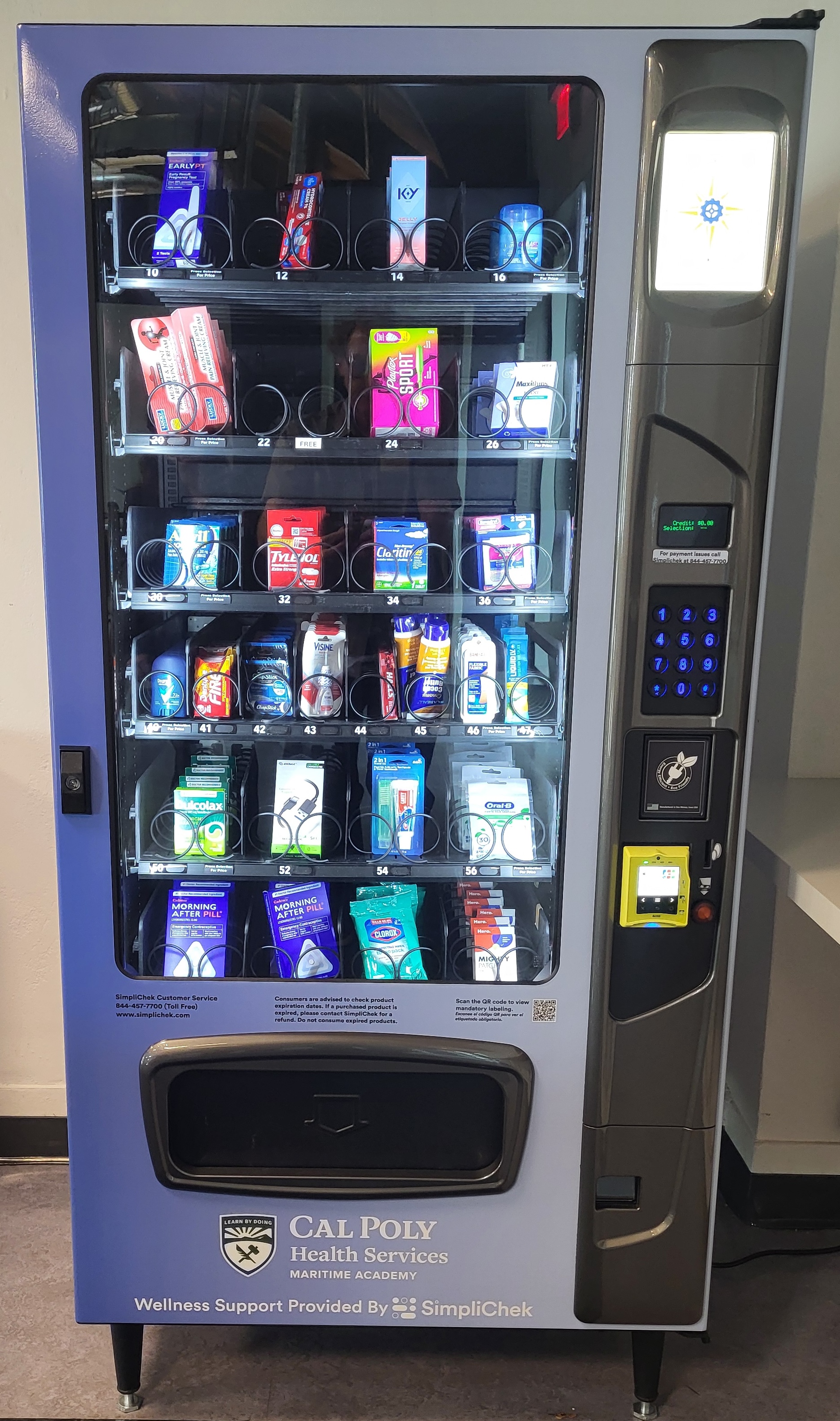
Campus Health and Wellbeing's medical vending machine program offers the convenience of accessing common over-the-counter items without the need to visit the Maritime Health Center. See our list of available items below.
|
Mayo Hall
Open 24 hours with badge access
Accepts credit and debit card payments only |
|
Overdose Prevention / Naloxone
Drug overdose is the leading cause of accidental death in the United States.
Naloxone (brand name Narcan) is a medicine that can reverse an opioid overdose. It is non-addictive, has virtually no side effects and has no potential for abuse as it does not produce any high effect. It comes in the form of a nasal spray or an injection and is safe to give to anyone suspected of experiencing and overdose. Naloxone only works on opioids in the brain and will have no effect on someone without opioids in their system.
Overdose occurs when opioids cause a person to stop breathing. Naloxone works within minutes by temporarily removing opioids from their receptors, allowing the person to breathe again.
The CDC (Centers for Disease Control and Prevention ) urges people to carry Naloxone if they use opioids or spend time with someone who does.
You can get Naloxone spray and Fentanyl test strips at the Student Health Center, Residence Life Office and the campus Police Department.
BASICS Alcohol Program
This is a preventive intervention designed to help college students make better decisions about alcohol use.
Description
Brief Alcohol Screening and Intervention of College Students (BASICS) is a harm-reduction intervention for college students. Students often conform to patterns of heavy drinking they see as acceptable, while holding false beliefs about alcohol’s effects or actual alcohol-use norms. BASICS is designed to help students make better decisions about using alcohol. The program’s style is empathic, rather than confrontational or judgmental. It aims to 1) reduce alcohol consumption and its adverse consequences, 2) promote healthier choices among young adults, and 3) provide important information and coping skills for reducing risk.
Components
The program is conducted over the course of two interviews (pre and post). As a harm-reduction approach, BASICS aims to motivate students to reduce risky behaviors instead of targeting a specific drinking goal such as abstinence or reduced drinking. Students can be identified through routine screening or through referral from medical, housing, or disciplinary services.
Before or after the first interview (pre), the student receives a self-report questionnaire to complete as well as other surveys and questionnaires. From these measures and the first interview, information is gathered about the student’s alcohol consumption pattern, personal beliefs about alcohol, understanding of social alcohol norms, and family history.
Group counseling or other support interventions may be recommended or required between pre and post interviews.
The second interview (post), which occurs about 2-4 weeks after the initial interview, provides the student with personalized feedback on his or her patterns of drinking, typical and peak blood alcohol concentration, comparison of drinking patterns with other college students of the same age and gender, and level of family history of alcohol problems.
Moreover, the program challenges inaccurate alcohol norms and myths about alcohol’s effects, highlights alcohol-related negative consequences, suggests ways to reduce future risks associated with alcohol use, and provides a menu of options to assist in making changes. Screening and referral for stepped-care treatment is also offered as needed.
Scheduling
To get started with the BASICS program, schedule an appointment with Dr. Ian Wallace in the Student Health Center (707-654-1170) or use the daily drop-in hour from 2-3 p.m.